Hiatal Hernia: Symptoms and Treatment
A hiatal hernia happens when part of the stomach or another abdominal organ moves through an opening in the diaphragm into the chest. Some cause no symptoms; others can contribute to reflux, heartburn, trouble swallowing, or chest discomfort.
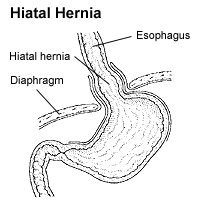
What a hiatal hernia is
The diaphragm is the muscle that separates the chest from the abdomen. The esophagus passes through an opening in it before joining the stomach. A hiatal hernia occurs when part of the stomach moves upward through that opening.
Hiatal hernias are commonly described as sliding or paraesophageal. In a sliding hernia, the stomach’s connection to the esophagus moves up and down through the opening. In a paraesophageal hernia, part of the stomach sits beside the esophagus in the chest.
Symptoms
Many hiatal hernias do not cause noticeable symptoms. When symptoms occur, they may be related to acid reflux, including heartburn or a sour or acidic taste in the mouth.
Other possible symptoms include trouble swallowing or chest discomfort. These symptoms can have causes other than a hiatal hernia, so a clinician can help assess them.
Diagnosis and treatment
A clinician may evaluate symptoms and use tests to check for a hiatal hernia or reflux. The approach depends on the hernia, symptoms, and overall health.
When reflux is present, treatment may include changes to eating habits or other lifestyle measures, as well as medicines recommended by a clinician. Surgery may be considered for some people, including when symptoms are severe or complications occur.
When to seek care
Talk with a healthcare professional about persistent heartburn, trouble swallowing, or unexplained chest discomfort. Seek urgent care for severe chest or abdominal pain, vomiting blood, or difficulty breathing.
Questions people ask
What are the symptoms of a hiatal hernia?
Some people have no symptoms. Others may have heartburn, an acidic taste in the mouth, trouble swallowing, or chest discomfort.
How is a hiatal hernia treated?
Treatment depends on symptoms and the type of hernia. It may involve lifestyle measures or medicines for reflux, and surgery may be considered in some cases.
What are the types of hiatal hernia?
The main types are sliding and paraesophageal. In a sliding hernia, the stomach’s connection to the esophagus moves through the diaphragm opening; in a paraesophageal hernia, part of the stomach sits beside the esophagus.
Is “hialital hernia” the same as hiatal hernia?
“Hialital hernia” is likely a misspelling of “hiatal hernia,” the condition in which part of the stomach moves through an opening in the diaphragm.
This information is general and is not a substitute for medical advice; seek urgent care for severe or sudden symptoms.
Keep exploring
 PageHemorrhoids: Symptoms and TreatmentHemorrhoids are swollen or inflamed blood vessels in the anal canal. They may cause painless, bright red bleeding, pain, or swelling, depending on their location; rectal bleeding should not automatically be assumed to be hemorrhoids.
 PageFibromyalgia: Symptoms and TreatmentFibromyalgia is a long-term condition marked by widespread chronic pain. It can also cause fatigue, unrefreshing sleep, trouble thinking or remembering, and other symptoms; treatment focuses on managing symptoms and supporting daily function.
 PageSpinal Stenosis: Symptoms and TreatmentSpinal stenosis is narrowing in the spinal canal or openings where nerves pass, which can put pressure on the spinal cord or nerve roots. Treatment depends on symptoms and their severity and may include physical therapy, medication, injections, or surgery.
 PageDiverticulitis: Symptoms, Causes, and TreatmentDiverticulitis is inflammation of small pouches that can form in the wall of the large intestine. It often causes lower abdominal pain and may also cause nausea, fever, or changes in bowel habits; treatment depends on how severe it is.
- PageHyperlipidemia: Meaning and SymptomsHyperlipidemia means having abnormally high levels of lipids, such as cholesterol or triglycerides, in the blood. It usually causes no noticeable symptoms and is typically found with a blood test.
 PagePancreatitis: Causes and SymptomsPancreatitis is inflammation of the pancreas, an organ behind the stomach that helps digest food and makes hormones. It can be acute and short-term or chronic, and often causes severe upper-abdominal pain that may spread to the back.