What Is the Prostate?
The prostate is a gland in the male reproductive system, located below the bladder and around part of the urethra. It makes fluid that becomes part of semen and can affect urination if it grows or develops a health problem.
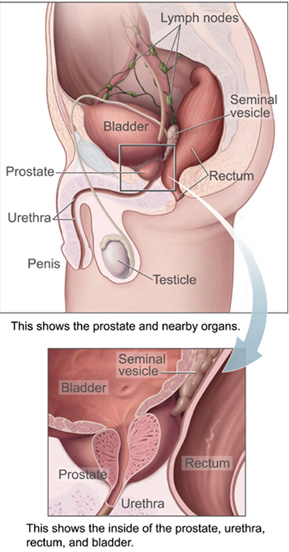
Where the prostate is
The prostate sits just below the bladder and in front of the rectum. The urethra—the tube that carries urine out of the body—passes through it.
Its position means that changes in the prostate can sometimes affect the flow of urine. The prostate is surrounded by a capsule of fibrous and muscular tissue.
What the prostate does
The prostate makes some of the fluid in semen. Muscles in the gland also help move semen into the urethra during ejaculation.
The prostate is not needed to make urine, but because the urethra passes through it, prostate changes can influence urination.
How the prostate changes
The prostate often grows larger with age. Enlargement is common and does not by itself mean a person has prostate cancer.
Prostatitis, or inflammation of the prostate, and prostate cancer are other conditions that can affect the gland. Urinary symptoms can have several causes, so a clinician can help assess them.
When to seek medical advice
Talk with a health care professional about new or persistent trouble urinating, blood in the urine or semen, or pain in the pelvic area. These symptoms do not always mean there is a prostate problem, but they deserve assessment.
A clinician can discuss whether an exam or tests, such as a prostate-specific antigen (PSA) blood test, are appropriate for an individual.
Questions people ask
What is the prostate?
It is a gland in the male reproductive system that makes some of the fluid in semen. It sits below the bladder and surrounds part of the urethra.
Where is the prostate located?
The prostate is below the bladder and in front of the rectum. The urethra passes through it.
What does the prostate do?
It produces some fluid in semen, and its muscles help move semen during ejaculation.
Can an enlarged prostate be cancer?
Prostate enlargement is common with age and does not by itself mean cancer. A clinician can evaluate symptoms and discuss testing when appropriate.
This information is general and is not a substitute for medical advice, diagnosis, or treatment.
Keep exploring
 PageThe SunThe Sun is the star at the center of our solar system. It produces energy through nuclear fusion in its core and supplies most of the energy that supports life on Earth.
 PagePenguinsPenguins are flightless, semi-aquatic birds adapted for swimming and hunting in the ocean. They live almost entirely in the Southern Hemisphere, and most eat krill, fish, squid, and other sea life.
 PageThesaurusA thesaurus is a reference work that groups words by meaning and lists synonyms and sometimes antonyms. Writers use one to explore word choices and find a word that better fits an idea.
 PageWhat Is Psychology?Psychology is the scientific study of the mind and behavior. It examines how people and other animals think, feel, and act, including conscious and unconscious processes.
- PageWhat Is Poop?Poop, also called stool or feces, is waste that leaves the body after food has been digested. It contains water and material the body did not absorb, along with bacteria and other substances.
- PageATP in Biology and MedicineATP, or adenosine triphosphate, is a molecule cells use to transfer energy for essential processes. In medicine, ATP is also a term used in specific clinical contexts, including some treatments for abnormal heart rhythms; its use depends on the condition and local practice.