Prime Numbers
A prime number is a whole number greater than 1 with exactly two positive factors: 1 and itself. For example, 5 is prime, while 4 is composite because it can be divided evenly by 2.
What makes a number prime?
A prime number is a natural number greater than 1 that cannot be written as a product of two smaller natural numbers. Its only positive divisors are 1 and the number itself.
A number greater than 1 that is not prime is called composite. For example, 5 is prime, but 4 is composite because 4 = 2 × 2.
How to check if a number is prime
To test a whole number, check whether any smaller whole number greater than 1 divides it evenly. You only need to check possible divisors up to the number’s square root.
- 1If the number is 1 or less, it is not prime.
- 2Check whether any whole number from 2 up to the square root divides it with no remainder.
- 3If one does, the number is composite; if none do, it is prime.
Examples of prime numbers
The first few prime numbers are 2, 3, 5, 7, 11, and 13. The number 2 is the only even prime, because every other even number is divisible by 2.
Numbers such as 6 and 9 are composite: 6 = 2 × 3, and 9 = 3 × 3.
Why prime numbers matter
Prime numbers are the basic building blocks of whole numbers greater than 1. The fundamental theorem of arithmetic says each such number is either prime or can be factored into primes in exactly one way, apart from the order of the factors.
Questions people ask
What is a prime number?
A prime number is a whole number greater than 1 whose only positive factors are 1 and itself.
Is 1 a prime number?
No. A prime number has exactly two positive factors, while 1 has only one.
Is 2 a prime number?
Yes. Its only positive factors are 1 and 2, making it the smallest prime and the only even prime.
How can you tell if a number is prime?
Check whether any whole number greater than 1 and no greater than its square root divides it evenly. If none does, the number is prime.
Keep exploring
- PageMathMath, short for mathematics, is the study of ideas such as numbers, shapes, sets, functions, and probability. It uses logical reasoning and proof to describe patterns and solve problems.
 PagePeriodic Table of ElementsThe periodic table arranges chemical elements by atomic number, in rows called periods and columns called groups. Elements in the same group often have similar chemical properties, making the table useful for understanding and comparing elements.
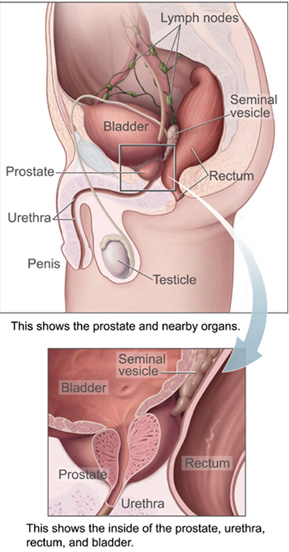 PageWhat Is the Prostate?The prostate is a gland in the male reproductive system, located below the bladder and around part of the urethra. It makes fluid that becomes part of semen and can affect urination if it grows or develops a health problem.
 PageMultiplicationMultiplication combines quantities to find their product. It can represent equal groups, repeated addition, or scaling; for example, 4 × 3 = 12 means four groups of three make 12.
- AppSudokuA fresh puzzle every time, from easy to expert, with notes and hints.
 PagePentagons: Definition and PropertiesA pentagon is a polygon with five sides and five angles. The interior angles of any simple pentagon add up to 540°.