Patagonia Travel Guide
Patagonia is a vast region at the southern end of South America, shared by Argentina and Chile. A trip can include Andean mountains, lakes, fjords, rainforests, glaciers, deserts, and steppes, so choose a region and route that fit your time and interests.
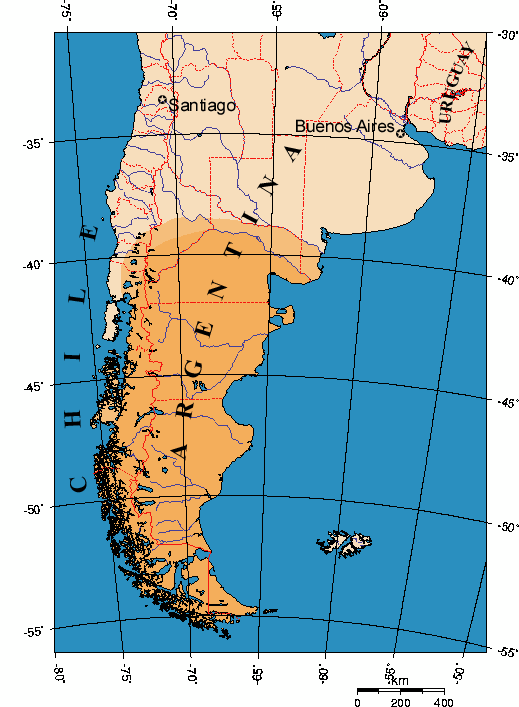
Where is Patagonia?
Patagonia covers the southern part of South America across Argentina and Chile. The Andes run through its western side, while the Atlantic Ocean lies to the east.
The region is not a single country or one small destination. Its landscapes range from lakes and glaciers in the west to dry plains and tablelands farther east.
What to see in Patagonia
The western part of Patagonia is known for the southern Andes and includes lakes, fjords, temperate rainforests, and glaciers. The eastern side has deserts, tablelands, and steppes.
Pick places based on the kind of landscape and activities you want, then check how they connect before building a route. Distances across the region can make an ambitious itinerary difficult.
- Andean mountains and lakes
- Fjords, rainforests, and glaciers
- Eastern deserts, tablelands, and steppes
How to plan a trip to Patagonia
A good plan starts with narrowing down this large region rather than trying to cover it all. Check current transport options and local conditions for each stop before you commit to an itinerary.
- 1Choose whether to focus on Argentina, Chile, or destinations on both sides of the border.
- 2Select a few places based on the landscapes and experiences you want.
- 3Set travel dates and check seasonal conditions for your chosen destinations.
- 4Arrange transport and accommodations, allowing time for travel between stops.
- 5Review current local guidance before outdoor activities.
Land and water around Patagonia
Patagonia faces the Pacific Ocean to the west and the Atlantic Ocean to the east. Waterways to the south include the Strait of Magellan, the Beagle Channel, and the Drake Passage.
Because landscapes and conditions vary across the region, travel details can differ from one destination to another. Check up-to-date information for the specific places on your route.
Questions people ask
Where is Patagonia in South America?
Patagonia is in the southern part of South America, spanning Argentina and Chile. The Andes are on its western side.
Is Patagonia a country?
No. Patagonia is a geographical region governed by Argentina and Chile.
How do you plan a trip to Patagonia?
Choose a few destinations and landscapes that interest you, then check dates, transport, and local conditions for those places. The region is large, so leave time to travel between stops.
Weather, access, and outdoor conditions can vary; check current local guidance before traveling or taking part in activities.
Keep exploring
- PageValparaíso, Chile Travel GuideGreater Valparaíso is a metropolitan area on Chile’s Pacific coast, centered on the historic port city of Valparaíso. It includes neighboring cities such as Viña del Mar and is known for its coastal setting and hillside neighborhoods.
 PageCartagena, Colombia Travel GuideCartagena is a Caribbean port city in northern Colombia, known for its historic walled center, colonial architecture, and coastal setting. Plan time for the Old Town, nearby Getsemaní, and a boat trip or beach outing if it suits your schedule.
 PageChile: Country Guide and MapChile is a long, narrow country in southwestern South America, between the Pacific Ocean and the Andes Mountains. Its capital and largest city is Santiago, and Spanish is its official and national language.
- PageGermany Travel and Country GuideGermany, officially the Federal Republic of Germany, is a country in Central and Western Europe. Its capital and largest city is Berlin, and the country borders nine nations.
 PageAtacama Desert Travel GuideThe Atacama Desert is in northern Chile, between the Pacific coast and the Andes. Many travelers stay in San Pedro de Atacama and visit nearby desert landscapes on day trips; flying to Calama and continuing by road is a common route.
 PageLandmannalaugar Travel GuideLandmannalaugar is a geothermal area in Iceland’s Fjallabak Nature Reserve, in the Highland region. It is known for natural hot springs, colorful landscapes, and the Laugahraun lava field, formed in an eruption around 1477.