Cheese Guide
Cheese is a dairy food made by separating solid milk curds from liquid whey. It comes in many flavors, textures, and forms, depending in part on the milk and how it is made.
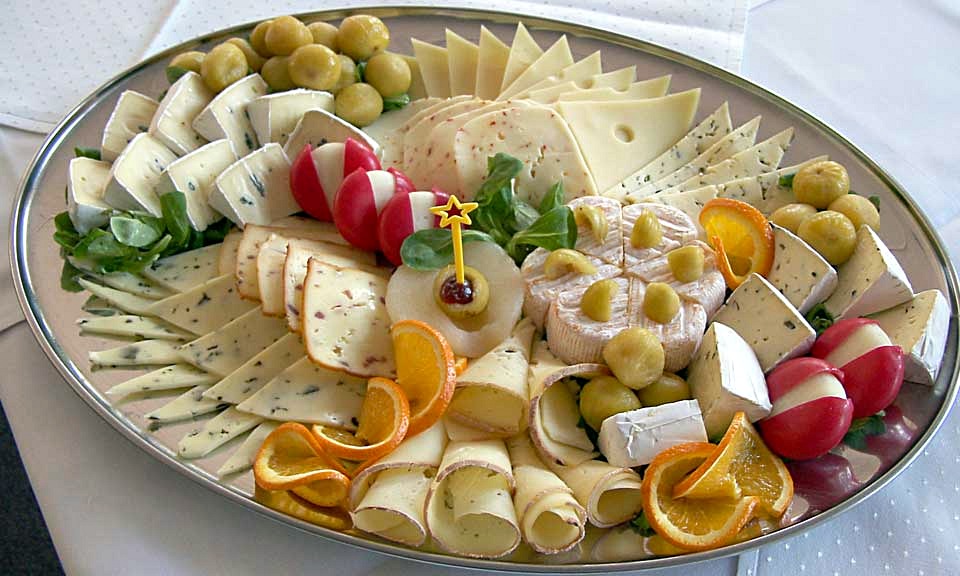
What cheese is
Cheese is made from milk, usually from cows, goats, or sheep. Some cheeses are made with water buffalo milk.
The finished cheese is made from the milk’s solid curds, which contain proteins and milkfat. The liquid left behind is called whey.
The science of cheese
Cheese-making starts by acidifying milk and adding rennet or similar enzymes. These changes cause casein, a protein in milk, to coagulate and form curds.
The curds are separated from the whey and pressed into cheese. Some cheeses also develop aromatic molds on the rind or throughout the cheese.
Milk used for cheese
The kind of milk used is one way cheeses can differ. Common sources include:
- Cow’s milk
- Goat’s milk
- Sheep’s milk
- Water buffalo milk
Why cheeses differ
Cheeses vary in flavor, texture, and form. Differences in the milk and in the production process help create that range.
Mold can also be part of a cheese: it may grow on the outside as a rind or be present throughout.
Questions people ask
What is cheese made of?
Cheese is made from milk. Its solid curds contain milk proteins and milkfat.
How is cheese made?
Milk is acidified and enzymes are added to make its proteins coagulate into curds. The curds are separated from the whey and pressed into cheese.
What is the science behind cheese?
Acid and enzymes cause casein, a milk protein, to coagulate. This forms the curds that are separated from liquid whey.
What kinds of milk are used to make cheese?
Cheese is usually made from cow’s, goat’s, or sheep’s milk. Water buffalo milk is also used.
Keep exploring
 PagePizza GuidePizza is an Italian dish made with a flat base of leavened wheat dough, usually topped with tomato, cheese, and other ingredients. It is baked at high heat, traditionally in a wood-fired oven.
- PageBanking GuideBanking is the business of accepting deposits and providing services such as loans and payments. Banks help people and organizations hold and access money, while lending funds directly or through capital markets.
 PageCheesecake Recipes and TipsCheesecake is a rich, creamy dessert made with soft fresh cheese and sugar, with a cookie or pastry base often added. It can be baked or made without baking, and is usually served chilled.
- PageSnoopy GuideSnoopy is a beagle and one of the central characters in Charles M. Schulz’s Peanuts comic strip. He first appeared in the strip on October 4, 1950, and is known for his imaginative adventures.
 PageGoats: Facts and GuideGoats are domesticated mammals in the Bovidae family, closely related to sheep. People keep them as livestock, and they were domesticated from wild goats in Southwest Asia and Eastern Europe.
 PageTeacher GuideA teacher helps students learn by guiding them as they build knowledge, skills, and understanding. Teachers are also called schoolteachers or educators.