Brown Bear Facts
The brown bear, scientifically named Ursus arctos, is a large bear species found across parts of North America, Europe, and Asia. It is an omnivore whose diet and behavior vary with its habitat and the season.
What is a brown bear?
Brown bears are members of the bear family, Ursidae. They vary in size and color, and some have a noticeable shoulder hump and long claws.
The species includes populations commonly known by regional names, such as grizzly bears in North America. The name “brown bear” covers a broad range of populations rather than one uniform-looking animal.
Where brown bears live
Brown bears live across parts of northern North America, Europe, and Asia. They use varied habitats, including forests, mountains, tundra, and coastal areas.
Their range and local numbers differ by region. In some places, populations are widespread; in others, they are limited or isolated.
What brown bears eat
Brown bears are omnivores. Depending on what is available, they eat plants, berries, roots, insects, fish, and other animals or carrion.
Food choices can shift with the seasons and location. This flexible diet helps the species live in many different environments.
Behavior and safety
Brown bears may spend winter in dens, with the timing and duration varying by climate and local conditions. They are generally solitary, though bears may gather where food is abundant.
A bear can be dangerous if surprised, approached, or drawn to food. Keep your distance, never feed one, and follow local wildlife guidance in bear country.
Questions people ask
What is the scientific name of the brown bear?
The brown bear’s scientific name is Ursus arctos.
Where do brown bears live?
Brown bears live in parts of North America, Europe, and Asia. Their habitats include forests, mountains, tundra, and coastal areas.
What do brown bears eat?
They are omnivores and may eat plants, berries, roots, insects, fish, and other animals or carrion. Their diet depends on the season and what is available locally.
Are grizzly bears brown bears?
Yes. Grizzly is a common name for some North American brown bears.
For safety, keep well away from wild bears, never feed them, and follow local wildlife guidance.
Keep exploring
 PageBears: Facts and GuideBears are large mammals in the family Ursidae, with eight living species found across North America, South America, and Eurasia. They vary in size, habitat, and diet, but share features such as broad paws, long snouts, and nonretractile claws.
 PageBison: Facts About the AnimalA bison is a large, hoofed mammal in the cattle family. The two living species are the American bison, native to North America, and the European bison; “buffalo” is a common name for the American bison.
- PageBlack Leopard FactsA black leopard is a leopard with melanism, a genetic trait that causes unusually dark pigmentation. Its coat may look nearly solid black, but the leopard’s rosette markings are often still present and can be seen in certain light.
 PageGiraffe FactsGiraffes are tall African hoofed mammals and the tallest living land animals. They belong to the family Giraffidae, whose closest living relative is the okapi.
 PagePandas: Facts and GuideThe giant panda is a bear native to China, known for its black-and-white coat and diet made up almost entirely of bamboo. Its forepaw has a thumb-like feature that helps it hold bamboo while eating.
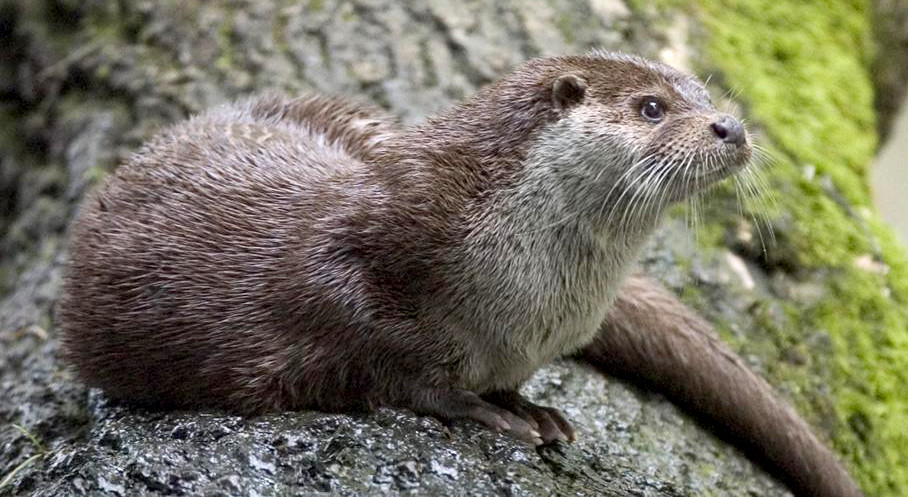 PageOtters: Facts and SpeciesOtters are carnivorous mammals in the subfamily Lutrinae, part of the weasel family. The 14 living species are semiaquatic and live in freshwater or marine environments, depending on the species.